
What Documents Do I Need to Sell My Car in the UK? (2026 Checklist)
Quick Answer: To sell your car in the UK in 2026, you need your V5C logbook (the registration document), a valid MOT certificate if the car is over three years old, a full or partial service history, photo ID, and any finance settlement letter if the car has outstanding finance. Once the sale completes, you
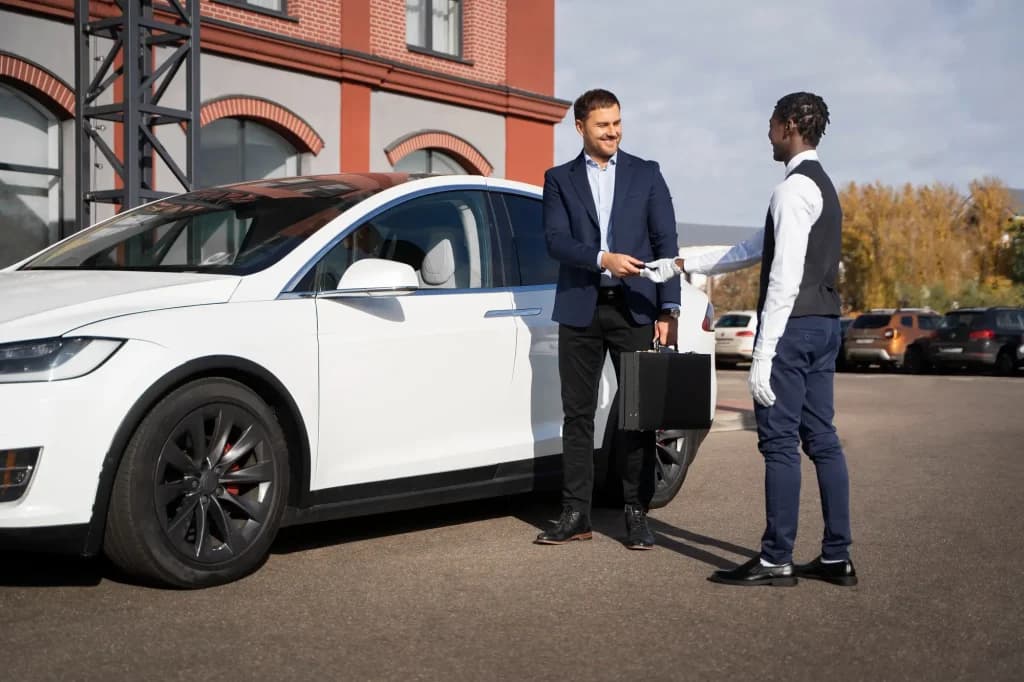
Quick Answer: To sell your car in the UK in 2026, you need your V5C logbook (the registration document), a valid MOT certificate if the car is over three years old, a full or partial service history, photo ID, and any finance settlement letter if the car has outstanding finance. Once the sale completes, you must notify the DVLA immediately using the V5C or online at gov.uk/sold-bought-vehicle. Sell My Car Today handles all DVLA paperwork on your behalf on collection day. Get a free valuation in 30 seconds at sellmycartoday.uk or call 03337 729 283.
Why Having the Right Paperwork Matters
Selling a car without the correct documentation does not always prevent a sale from happening, but it slows everything down, reduces buyer confidence, and almost always results in a lower offer. Private buyers in particular rely on paperwork to verify a car's history, confirm there is no outstanding finance, and satisfy themselves they are dealing with the legitimate registered keeper.
For sellers, having everything organised before a buyer arrives or before a specialist buyer arrives to collect means fewer delays, no awkward questions at the point of handover, and no risk of the sale falling through at the last moment over a missing document.
This guide covers every document you may need, what each one does, what happens if you do not have it, and exactly what to do with each document after the sale completes.
The Core Documents, What Every Seller Needs
1. V5C Logbook (Vehicle Registration Certificate)
The V5C is the most important document in any car sale. It shows who the registered keeper is and allows the keeper details to be updated with the DVLA when the car is sold.
One misconception is worth clearing up immediately: the V5C does not prove legal ownership, but it is essential for registering responsibility with the DVLA. You are selling your right as registered keeper, not a title deed. The V5C records this correctly.
Before you sell, check three things on your V5C: the registration number matches the vehicle in front of you, the VIN (Vehicle Identification Number) on the document matches the plate on the dashboard, and your name and address are current. Any discrepancy will raise questions you do not want to answer at the point of sale.
The V5C contains a yellow section which the buyer needs when notifying the DVLA of the change of keeper. Keep the green new keeper supplement section (V5C/2) separate — this is what a private buyer uses to tax the vehicle immediately while waiting for their new V5C to arrive from the DVLA.
What if your V5C is missing?
If you cannot find your V5C, you need to apply for a replacement before selling. You can apply online via the GOV.UK website or by post using form V62. The replacement fee is £25. DVLA typically issues a replacement within five working days when applied for online.
If you want to sell before the replacement arrives, some specialist car buyers will purchase without a V5C and handle the DVLA notification themselves. Sell My Car Today does this regularly — see our full guide.
2. MOT Certificate
The MOT certificate acts as proof of your vehicle being roadworthy and meeting the environmental standards. Although all MOT certificates issued since 2006 are available online, it is good practice to provide the buyer with all the old certificates.
For vehicles over three years old, buyers will check the MOT status as a matter of course. They look at two things: whether the current certificate is valid, and whether the MOT history shows consistent annual testing with mileage figures that increase logically year on year. An MOT history with gaps, inconsistent mileage, or repeated advisories on the same items raises questions.

If you have lost or damaged your MOT certificates, you can apply for a replacement on gov.uk for £10. Alternatively, any buyer can check the full MOT history free of charge at check.mot.status.service.gov.uk — so your physical certificate is helpful but not essential.
What if your MOT has expired?
You can sell a car with an expired or failed MOT, but you must be transparent about it. Sell My Car Today buys cars without a valid MOT across all London postcodes — see /how-to-sell-my-car-with-mechanical-problems-2/ for how the valuation works.
3. Service History
A complete digital service history can increase buyer confidence and your sale price by up to 26%. Service history is the paper or digital record of every scheduled service the car has received — dates, mileage, which work was carried out, and the stamp or signature of the garage that did it.
A full main dealer service history carries the most weight with buyers. A full independent garage history is nearly as strong provided the stamps are legible and the intervals are consistent. A partial history — some years stamped, some gaps — still adds value but will invite negotiation. No history at all will reduce your offer, particularly on higher-mileage vehicles where buyers need reassurance about maintenance.
A complete service history boosts your car's value by proving it has been well cared for. The service book is usually found with the owner's manual and shows stamped records of all manufacturer-scheduled maintenance, including dates, mileage, and service details.
If your service history is digital — as is standard for most post-2018 vehicles — you can access it via the manufacturer's app or the garage's service portal. Print a summary or provide the login details to the buyer if requested.
4. Photo ID
It is not a legal requirement, but bringing photo ID — such as your driving licence or passport — plus proof of address can go a long way.
For sales to regulated car buying companies, photo ID is increasingly standard to comply with anti-money laundering regulations. Sell My Car Today will ask to verify your identity as part of the payment process — this protects both parties and ensures payment goes to the correct person.
Accepted forms of ID: UK driving licence (photocard), passport, national identity card. Proof of address: a recent utility bill or bank statement dated within the last three months.
5. Spare Keys
Providing both sets of keys to a vehicle is expected in most sales. A missing spare key reduces your offer — replacement keys for modern vehicles with proximity fobs and transponders cost between £150 and £400 depending on the make. Buyers factor this cost in.
If you only have one key, say so clearly before the sale and before the inspection. Discovering a missing key at the point of handover feels like a concealment, even when it is not. Transparency at the start prevents it from being used as a last-minute negotiating point.
Additional Documents — Helpful But Not Essential
Finance Settlement Letter
If your car has outstanding PCP or HP finance, the finance must be settled before the sale completes. Your lender will provide a settlement figure on request — this is the total amount required to clear the debt on a specific date.
You cannot legally drive any vehicle over three years old on public roads without a valid MOT. While you can technically sell a car with a lapsed MOT to a motor trader or dealership, selling it privately becomes incredibly difficult. Similarly, you cannot transfer ownership of a financed car without clearing the finance first.
Sell My Car Today settles outstanding PCP and HP finance directly with your lender on the day of collection — see our full guide.
Receipts for Repairs and Modifications
Receipts for recent repairs, parts replacements or servicing work outside a scheduled service provide supporting evidence of the car's maintenance. They are particularly valuable for buyers of older or higher-mileage vehicles. A receipt showing a recent cambelt replacement, new brake discs, or four new tyres adds real confidence.
Warranty Documents
If your car is still within a manufacturer warranty or an extended warranty period, the warranty documents should be passed to the buyer. Some warranties transfer automatically on a change of keeper — others require formal notification to the warranty provider. Check your warranty terms and notify the provider after the sale.
Number Plate Retention Certificate
If you plan to keep your personalised number plate before selling, apply to the DVLA to retain it before the car is sold — not after. Once the V5C is transferred to a new keeper, removing the plate becomes significantly more complicated. Apply at gov.uk/personalised-vehicle-registration-numbers.
What to Do After the Sale: DVLA Notification
This step is not optional. Until you notify the DVLA, you are still the registered keeper. That means you could be held responsible for any fines, parking charges, or road tax linked to the vehicle after the sale. Do not skip this step.
You need: your vehicle registration number, the 11-digit document reference number from your V5C, the buyer's full name, the buyer's full address, and the date of sale.
The fastest way is online at gov.uk/sold-bought-vehicle. It takes five minutes and is completely free. When you complete the online notification, you will see a confirmation screen. Screenshot this or print it. This is your proof that you notified the DVLA of the sale.
If you sell to Sell My Car Today, we notify the DVLA on your behalf on the day of collection. You do not need to do anything.
What happens to your road tax?
Any remaining months of road tax are automatically refunded by the DVLA after you notify them of the sale. The refund goes to the address on the V5C — not to the buyer. You will receive a cheque within four to six weeks.
The Complete 2026 Checklist — At a Glance
Essential for every sale:
- V5C logbook — check registration, VIN and your name are all correct
- MOT certificate — current and valid, or clearly declared as expired
- Photo ID — driving licence or passport
- Both sets of car keys
Highly recommended:
- Full or partial service history
- Receipts for any recent repairs or servicing
- Finance settlement letter if outstanding finance exists
- Spare keys if available
After the sale:
- Notify DVLA immediately at gov.uk/sold-bought-vehicle
- Cancel your car insurance from the date of sale
- Notify any warranty provider of the change of keeper
- Keep your confirmation screenshot from the DVLA notification
How Sell My Car Today Simplifies the Paperwork
When you sell to Sell My Car Today, you need to have your V5C ready, your photo ID and your keys. We handle everything else.
We contact the DVLA on your behalf on the day of collection. We settle any outstanding finance directly with your lender. We notify the DVLA of the change of keeper. You confirm payment in your bank before we leave, and you have nothing further to do.
Get a free instant valuation in 30 seconds at sellmycartoday.uk — no personal details required. Call 03337 729 283 or WhatsApp 07424 956118. Same-day collection available across all London postcodes.
Frequently Asked Questions
What documents do I need to sell my car in the UK?
You need your V5C logbook, a valid MOT certificate if the vehicle is over three years old, service history, photo ID and both sets of keys. After the sale you must notify the DVLA at gov.uk/sold-bought-vehicle. Sell My Car Today handles all DVLA notification on your behalf. Call 03337 729 283.
Can I sell my car without a V5C logbook?
Yes, though it makes the process more complicated. You can apply for a replacement V5C online at gov.uk for £25 — it arrives within five working days. Specialist buyers including Sell My Car Today purchase vehicles without a V5C and handle the DVLA paperwork themselves. See our full guide at sellmycartoday.uk/can-you-sell-a-car-without-a-v5/.
Do I need to notify the DVLA when I sell my car?
Yes, immediately. Until you notify the DVLA, you remain the registered keeper and are liable for any fines, road tax and other charges associated with the vehicle. Notify online at gov.uk/sold-bought-vehicle using your registration number and the 11-digit reference on your V5C. The process takes five minutes and is free.
What happens to my road tax when I sell my car?
Any remaining full months of road tax are automatically refunded by the DVLA once you notify them of the sale. The refund is issued as a cheque to the address on the V5C and typically arrives within four to six weeks. You cannot transfer road tax to a new owner.
Do I need to provide a full service history to sell my car?
A full service history increases your sale price but is not a legal requirement. Even a partial history adds buyer confidence. Cars with no service history will attract lower offers, particularly at higher mileage. Sell My Car Today buys vehicles with any service history — or none at all.
Can I keep my personalised number plate when I sell?
Yes, but you must apply to the DVLA to retain the plate before the sale completes, not after. Apply at gov.uk/personalised-vehicle-registration-numbers. Once the V5C transfers to a new keeper, removing the plate becomes significantly more complicated.
Ready to Sell Your Car?
Have your V5C, ID and keys ready. We handle everything else.
- Free instant valuation at sellmycartoday.uk — 30 seconds, no personal details
- Same-day collection across all 32 London boroughs
- We notify the DVLA on your behalf on collection day
- Payment to your bank before we leave
Call 03337 729 283 or WhatsApp 07424 956118.