
How to Sell a Deceased Person’s Car in the UK: DVLA, Probate and Insurance Explained (2026)
Quick Answer: The executor named in the will, or an administrator appointed by the court, can sell a deceased person’s car. Start by telling the DVLA about the death, either through the Tell Us Once service or directly using the V5C and a short letter that says who should receive any vehicle tax refund. Complete
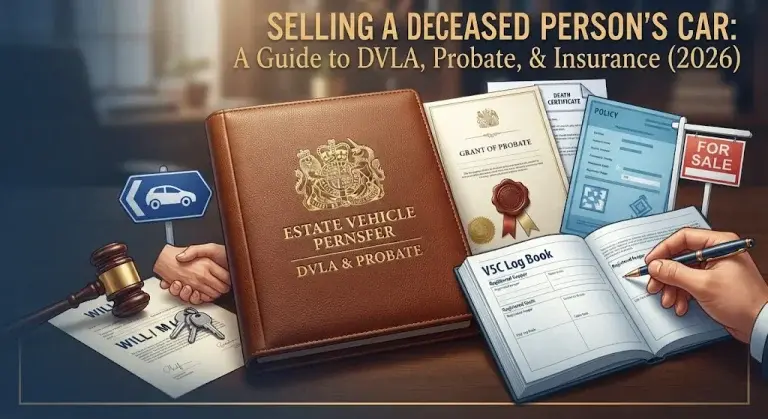
Quick Answer: The executor named in the will, or an administrator appointed by the court, can sell a deceased person's car. Start by telling the DVLA about the death, either through the Tell Us Once service or directly using the V5C and a short letter that says who should receive any vehicle tax refund. Complete the change of keeper on the V5C, and remember the buyer must tax the car in their own name because vehicle tax cannot be transferred. Keep the car insured if it is on the road, or declare it off the road with a SORN if it is not. Sell My Car Today offers free valuations and collection across London on 03337 729 283.
This guide is general information, not legal advice. If the estate is complicated, or you are unsure of your authority, ask a solicitor or a probate service before you sell.
Who can sell a deceased person's car?
A car belongs to the person's estate after they die. The person who can sell it is the one legally in charge of the estate:
- An executor, if the person left a will naming one.
- An administrator, appointed by the court, if there was no will.
If you are neither, for example a relative helping out, you need the executor or administrator to agree and to sign off the sale. A surviving joint keeper is in a different position and can usually carry on as the keeper, so check the V5C to see whose name is on it.
Do you need probate before you sell the car?
Probate is about the whole estate, not the car on its own, so the answer depends on what else the person owned.
An executor named in a will has authority from the date of death. An administrator has no authority until the court issues the grant. In practice, a buyer or the DVLA may ask for proof of your authority, usually a death certificate and, where it has been issued, the grant of probate.
If you are unsure whether you can sell before the grant arrives, ask the solicitor or probate service handling the estate. It is a short question for them and it protects you from selling without authority.
What should you do first?
- Do not drive the car unless you are authorised and it is properly insured. The person's insurance policy may no longer be valid, so contact the insurer and explain what has happened.
- Tell the DVLA about the death. The route is explained below.
- Secure the car and the paperwork. Find the V5C, both keys, the MOT certificate and any service history.
- Check for finance. A lender has a claim on the car until the balance is cleared.
- Decide whether to keep, sell or scrap it. There is no deadline to sell, but insurance, tax and storage costs keep running, so a decision sooner than later saves money.
How do you tell the DVLA that the registered keeper has died?
There are two routes:
- Tell Us Once. When you register the death, the council may offer this service. It can notify the DVLA for you, cancel the driving licence and end vehicle tax, and it covers up to five vehicles. You will still need to deal with the DVLA directly to sell the car.
- Contact the DVLA directly. Send a short letter with the V5C. The letter should give your relationship to the person who died, the date they died and who should be paid any vehicle tax refund. The DVLA will not know who to pay unless you say.
Follow the current instructions on the gov.uk page for telling the DVLA about a bereavement, because postal addresses and forms can change.

How do you change the keeper when selling?
Complete the change of keeper on the V5C with the buyer's details, give the buyer the new keeper slip, and send the rest of the V5C to the DVLA with your letter, as the gov.uk bereavement guidance describes. The buyer uses the slip to tax the car straight away.
Keep a written receipt showing the date, price, the registration and both parties' names and addresses. If the buyer is a business, ask for confirmation of when they will complete their side of the paperwork.
What if the V5C is missing?
You need the V5C to formally record a new keeper. If it cannot be found, apply to the DVLA for a replacement using the paper V62 form. The standard online replacement service is open only to the registered keeper, so it is not usually the route to use after a death. The replacement fee is £25 and it is sent to the address the DVLA holds for the car, which may be an old address if the person moved without updating it.
Some specialist buyers can still help when the V5C is missing. Our guide on selling a car without a V5C explains the options.

What happens to the vehicle tax?
Vehicle tax is not transferable. The buyer taxes the car in their own name before it is driven on a public road. If the person had paid tax, any full months left are refunded, and the refund goes to whoever you name in the letter to the DVLA. If the tax was paid by Direct Debit, it ends when the DVLA is told of the death.
What if the car is still on finance?
Tell the lender about the death. A car on a PCP or HP agreement belongs to the finance company until the balance is cleared, so the settlement figure has to be paid from the estate or from the sale proceeds. Ask the lender for a settlement figure in writing. If the car is worth more than the figure, the difference goes to the estate. If it is worth less, the shortfall is a debt of the estate, so speak to the solicitor before you decide. Our guide to selling a car on finance explains settlement figures, positive and negative equity.
What about a personalised number plate?
If the car has a personalised registration you want to keep, arrange the retention with the DVLA before the car is sold or transferred. Once the car has changed keeper, getting the plate back becomes much harder. The gov.uk bereavement guidance explains how this works when the keeper has died.
How do you value the car for the estate?
Executors usually need a value for the car as at the date of death for the estate accounts. A written valuation from a motor trader, or a documented offer from a car buyer, is the usual evidence. Ask the solicitor or probate service what they want to see, and keep any valuation with the estate papers.
A free valuation from Sell My Car Today takes 30 seconds at sellmycartoday.uk using the registration and mileage.
What are your options for selling?
| Route | Speed | Things to know |
|---|---|---|
| Private sale | Slow | Strangers visit the home, and buyers ask about authority and the V5C. Hard to manage while grieving. |
| Dealer or part exchange | Quick | Usually the lowest price. Some dealers will not take cars with paperwork gaps. |
| Online auction platform | A few days | Needs a clear V5C and photos. Fees can apply. |
| Specialist car buyer | Same day to a few days | One conversation, free collection, payment by bank transfer. |
For many families the deciding factor is not the last £200. It is avoiding weeks of calls, viewings and paperwork.
Documents checklist for selling a deceased person's car
- Death certificate (or certified copy)
- V5C in the deceased's name, or a V62 replacement application
- Proof of your authority: the will naming you, or the grant of probate or letters of administration where issued
- Your photo ID
- Both car keys
- MOT certificate and service history
- Finance settlement letter, if the car is on finance
- Your letter to the DVLA naming who should receive any tax refund
Our wider guide on documents needed to sell a car explains each item.
Frequently Asked Questions
Can an executor sell a deceased person's car?
Yes. An executor named in the will can sell the car, as can an administrator appointed by the court. A buyer or the DVLA may ask for proof of authority, such as a death certificate and the grant of probate where it has been issued.
Do I need probate to sell a deceased person's car?
robate applies to the whole estate, so it depends on what else the person owned. An executor's authority comes from the will, but an administrator cannot act until the court grants authority. Ask the solicitor or probate service handling the estate before you sell.
How do I tell the DVLA that someone has died?
Use Tell Us Once when you register the death, or contact the DVLA directly with the V5C and a letter giving your relationship, the date of death and who should receive any vehicle tax refund. Check the gov.uk bereavement guidance for the current instructions.
What happens to the road tax when the keeper dies?
Vehicle tax cannot be transferred. The buyer taxes the car in their own name. Any full months remaining are refunded to the person you name in your letter to the DVLA.
Can I sell a deceased person's car without the V5C?
You need a V5C to record a new keeper. If it is missing, apply to the DVLA for a replacement using form V62, which costs £25. Some specialist buyers can help while you wait.
Can I sell a deceased person's car if it is on finance?
Yes, but the finance must be cleared first. Ask the lender for a settlement figure and tell them about the death. The balance is paid from the estate or from the sale proceeds.
Should I keep the car insured after someone dies? If the car is on the road or being driven, it must be insured, and the original policy may no longer be valid. Tell the insurer. If the car is not being driven, declare it off the road with a SORN.
If you would like a valuation
Take your time. When you are ready, you can give us the registration and mileage for a free valuation, and we will tell you what we need from you. Collection is free across all 32 London boroughs and payment is made by bank transfer.
Call 03337 729 283 or WhatsApp 07424 956118, or start at sellmycartoday.uk.